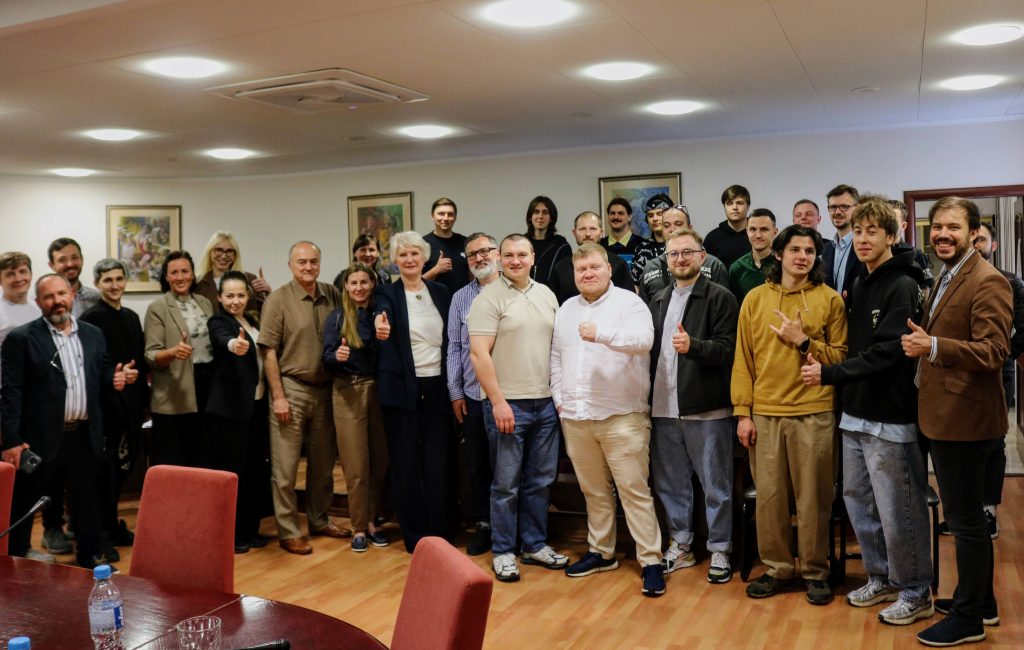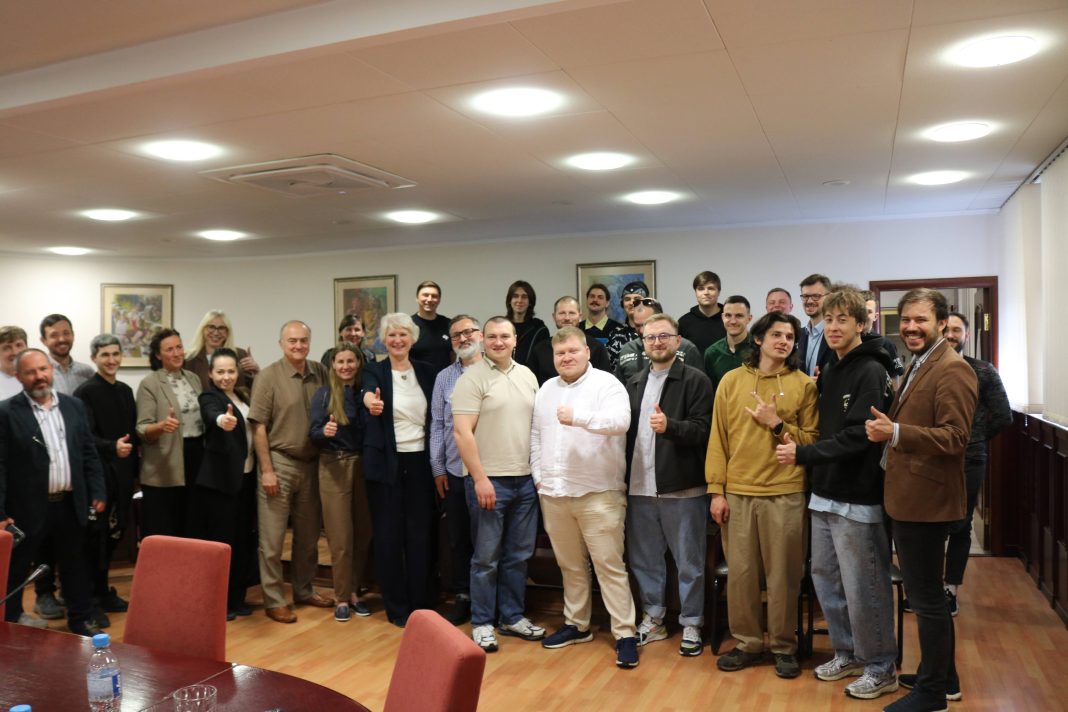
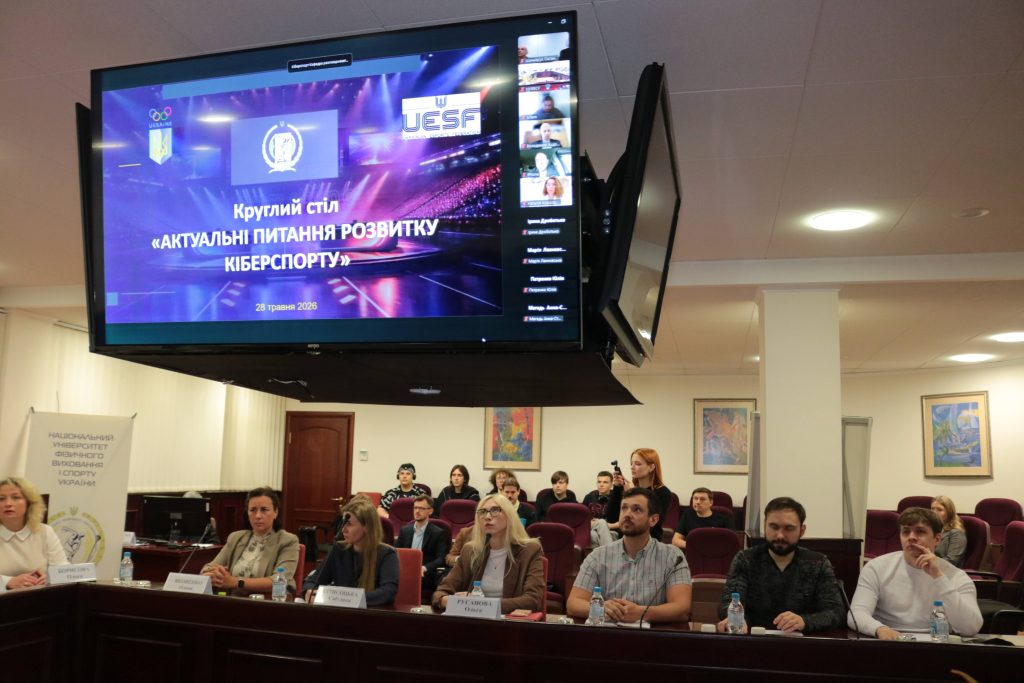
On May 28, 2026, representatives of the Ukrainian Esports Federation took part in the round table “Current Issues in Esports Development” hosted at the National University of Ukraine on Physical Education and Sport. The event brought together members of the NOC of Ukraine Esports Commission, researchers, industry professionals, the coaching community, and students.
Ukraine on the International Stage — Despite Everything
The first discussion panel was dedicated to international integration. Participants noted that even amid a full-scale war, Ukraine remains one of the most prominent esports nations in the world. Ukrainian players compete at the highest level in CS2, Dota 2, PUBG, and Valorant. At the most recent international Counter-Strike tournament, Ukraine fielded the largest number of participants among all countries.
Discussion also covered UESF’s partnership with The Esports Foundation as part of the Esports Nations Cup 2026, Ukraine’s role in international esports organizations, and prospects for hosting international events in Ukraine after the war.
At the same time, participants spoke candidly about the challenges. There’s no effective mechanism for athletes traveling to and returning from competitions. There’s a lack of systematic media work — most leading players live abroad and can’t serve as the voice of esports within the country. These issues need to be addressed at both the state and federation level.
From Coach to an Entire Industry
The second panel focused on shaping a professional standard for esports specialists. Esports in Ukraine already has official status and an existing professional standard for coaches — but beyond the coaching role, there remains a large unregulated space: tournament organizers, analysts, team managers, referees, competition coordinators, content specialists. These are the roles that actually make up the industry’s labor market.
International experience served as a reference point: China’s model for recognizing esports professions, South Korea’s state strategy for industry development, and France’s model for protecting players’ labor rights. Following the discussion, participants supported the initiative to develop a professional standard for industry specialists and adopted a corresponding resolution.
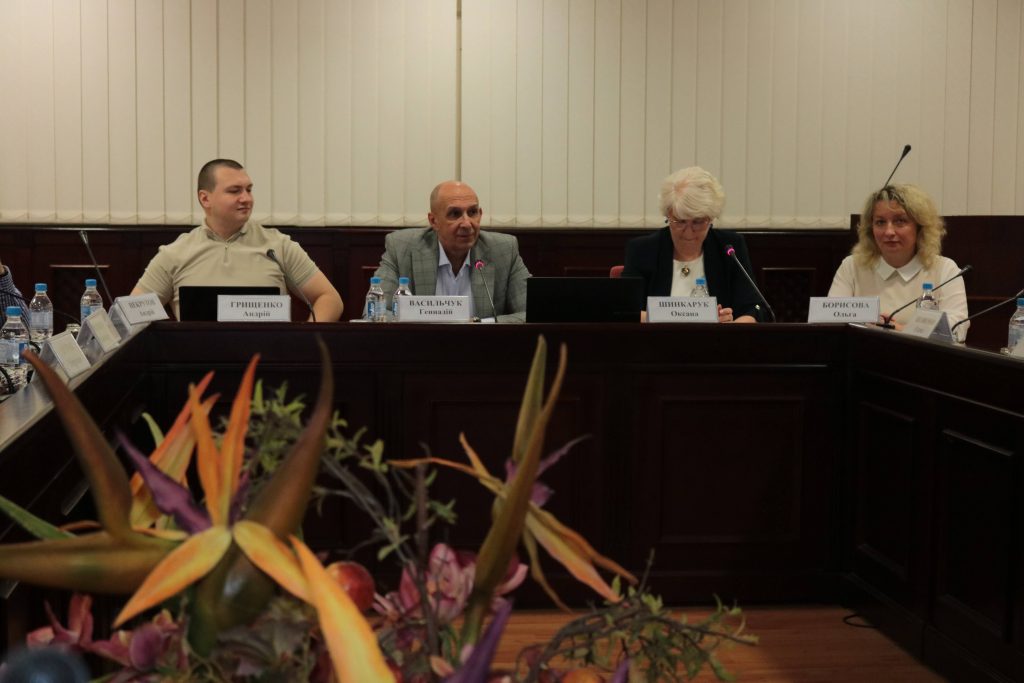
The Ukrainian Esports Federation consistently supports systematic dialogue between the state, the educational community, and the industry.
“Talking matters. And round tables like this allow us to do it openly — to hear the views of representatives from industry, education, business, and members of the NOC of Ukraine Esports Commission. This time we discussed Ukraine’s integration into the international esports community, the challenges during the war, and listened to outside perspectives — what could be changed or integrated into the federation’s work. There were also the first discussions on creating a professional standard for esports specialists. This is the first step toward the industry having not just tournaments, but a full-fledged system of professions,” — Andrii Gryshchenko, CEO of UESF.
The round table confirmed it: Ukraine’s esports community is ready to move forward — from a recognized sport to a full system of professions and a lasting international presence.